Understanding the different parameters visible on the IAQ page
 by Kayleigh-Ann Myles
Now that we understand how to access the IAQ page, let us grasp an understanding of the different parameters visible at the Kiosk view and how these parameters effect the quality of the air we breath.
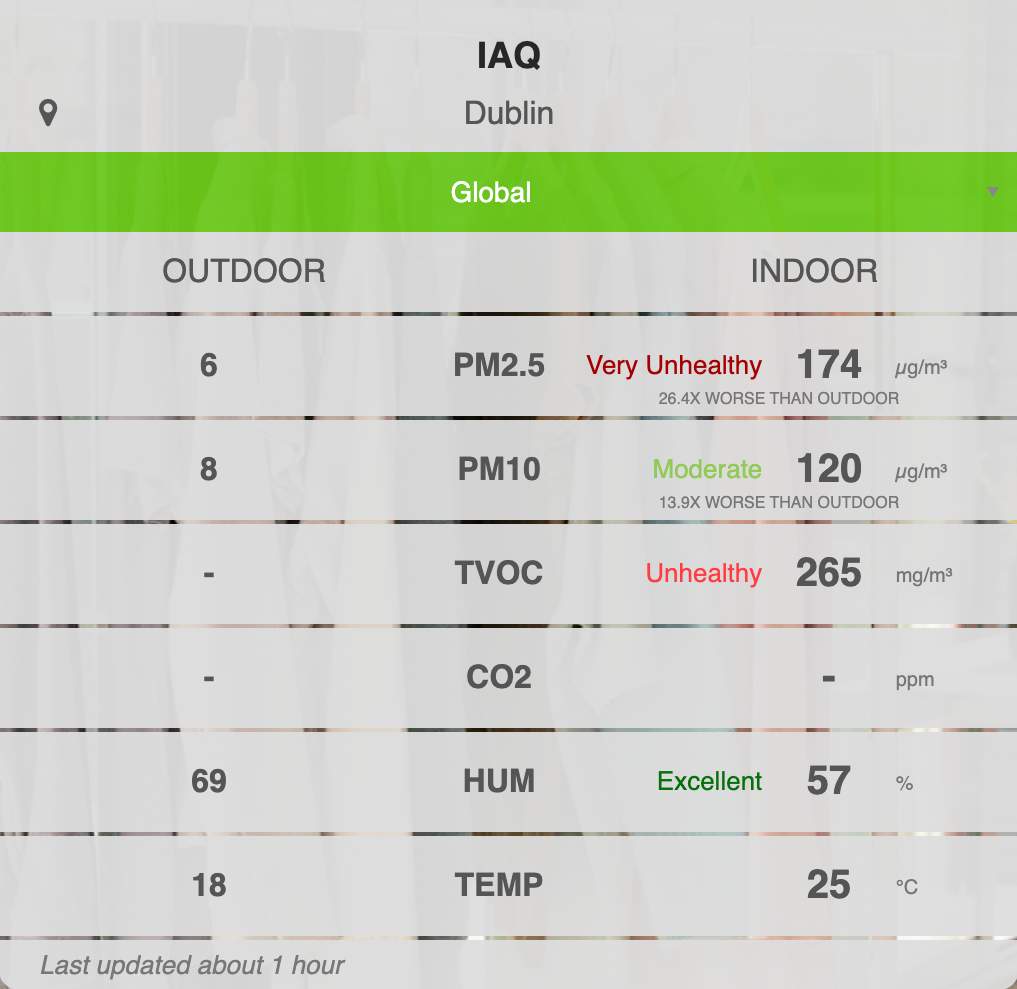
Table as visible on the IAQ page
PM
PM
Particulate Matter (PM) coins the term for the mixture of solid particles and liquid droplets found in the air. PM does not refer to particles that can be seen through the naked eye such as dust, soot or smoke. PM does, however, refer to the particles that appear so tiny they can only be seen whilst using an electron microscope.
Particle pollution can be split into two separate sections PM2.5 & PM10.
PM2.5- This includes finer inhalable particles, with diameters of 2.5 micrometers and smaller
PM10- This includes inhalable particles, with diameters of 10 micrometers and smaller
TVOC
TVOC
Total Volatile Organic Compounds (TVOC), are a group of compounds that have low water solubility and high vapour pressure at room temperature. To explain further, these compounds do not easily dissolve in water (low water solubility) and can easily release molecules in the air (high vapour pressure -> volatile). Think of petrol based fuels for example, they don’t mix with water or dissolve in it but create two separated layers instead, and you can easily smell if someone spilled a bit of petrol because of how easily the molecules in it get to leave the liquid layer and pass to a gaseous state.
Because there are many VOC's, definitions of the exact substances included are well stretched and uncertain. To name a few typically associated or calculated in TVOC; Benzene, Formaldehyde & Ethylene glycol are substances associated with VOC's.
These substances come from a varied array of different areas and situations, both from naturally and human-made sources. Substances found in the list of TVOC's can come from cleaning products, paints, carpets, furniture, pesticides and even electronic devices.
CO2
CO2
Carbon Dioxide (CO2) is a naturally occurring gas present in our atmosphere.
CO2 is a parameter many of you will be more familiar with for all the wrong reasons. As we are becoming increasingly aware of the effects of climate change on our planet, CO2 seems to be a topic closely linked to this and the negative effects on our planet.
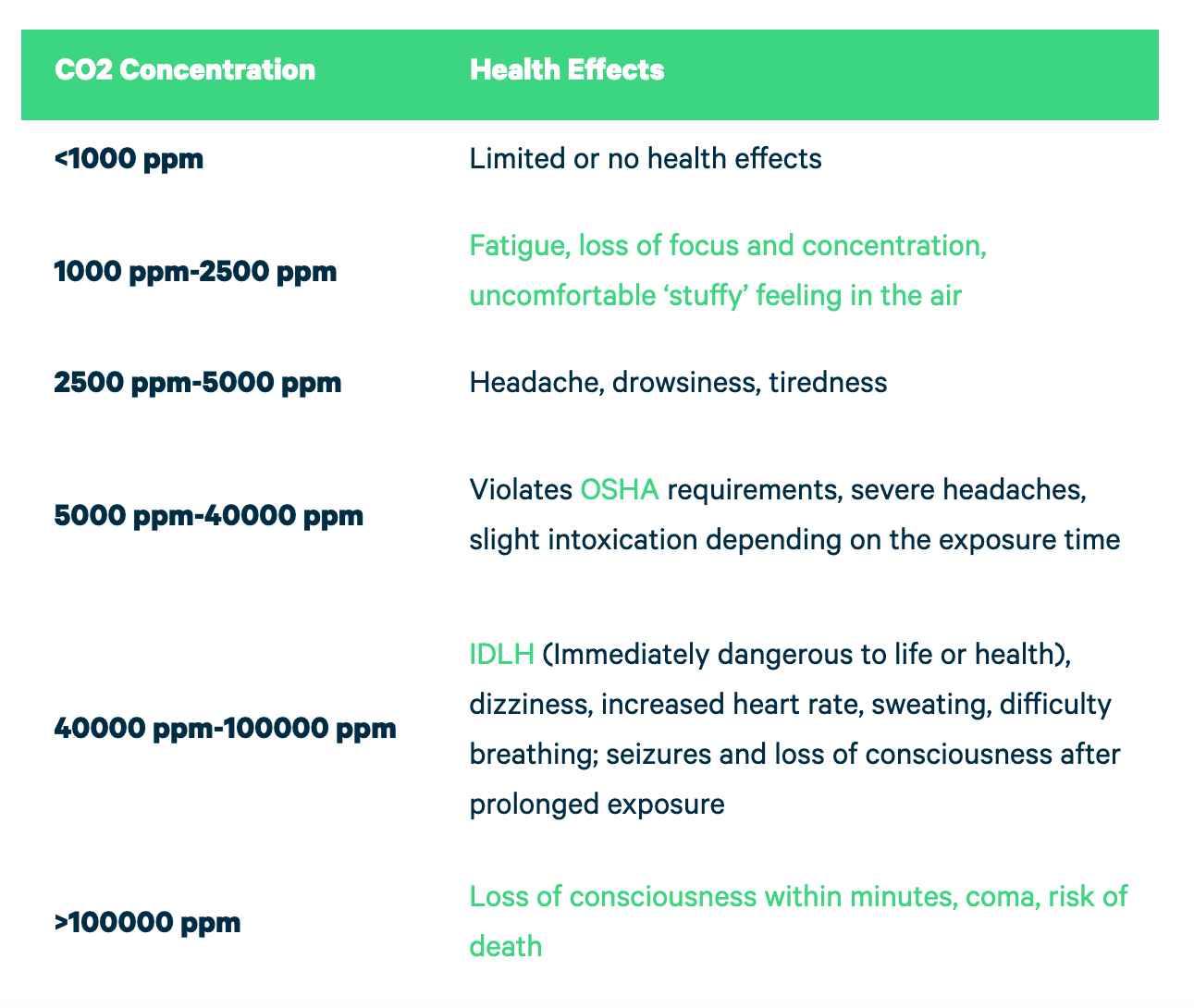
However, CO2 is also a crucial aspect of indoor air quality. There are three main contributors to CO2 production in indoor air quality 1. Humans, 2. Poor Ventilation, 3. Cooking. Please see the table from Kaiterra below which clearly highlights the different levels of CO2 parts per million with the affect on human health.
HUM
HUM
Humidity is the concentration of water vapour present in the air.
Air that contains high humidity can create mold, proliferation of bacteria and makes it harder to breathe. Air that contains low humidity can cause a discomfortable dryness in your nose and throat, and can lead to issues to the respiratory system if protracted over time. 40 to 60% are the comfortable levels and 30 to 70% are considered acceptable Air humidity levels, these thresholds can create a safer space for you and your environment.
Lets do a quick knowledge check to see if we are up to date with understanding the basics of the parameters on WatticsAir.
-
Fine inhalable particles
-
Naturally occurring gas present in our atmosphere.
-
Low water solubility and high vapour pressure.
Congratulations! ~ You are now familiar with the basic properties of the parameters available on the WatticsAir display page. To understand the WatticsAir Indoor Display options further please continue with this training to the next step.
You are doing great!